

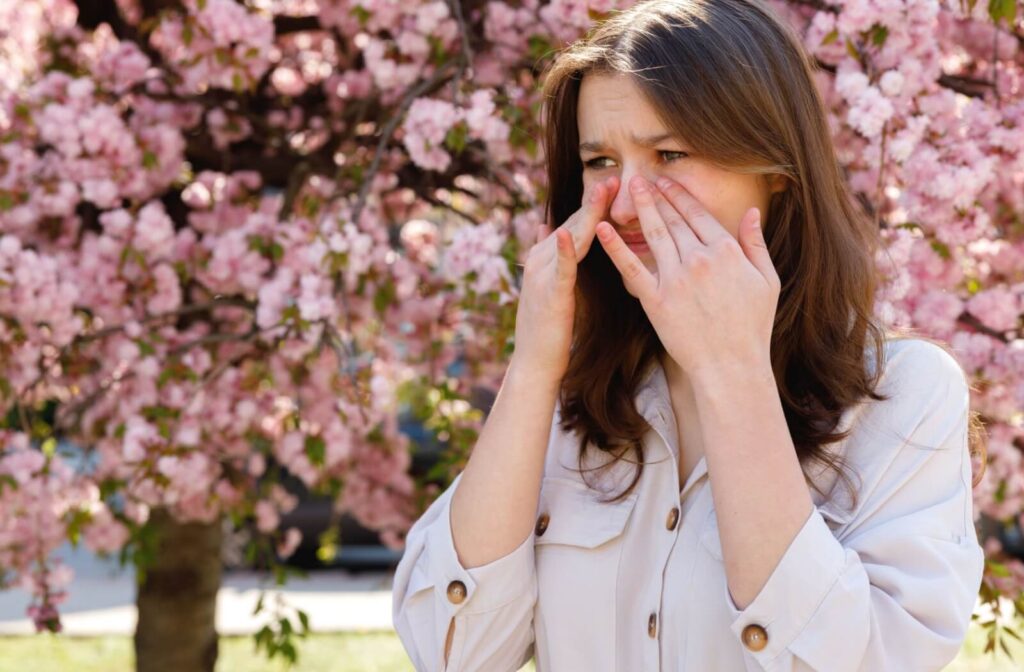
You know the frustrating feeling: waking up to puffy, itchy, and watery eyes. Allergy season can turn a beautiful day into an uncomfortable experience, making it hard to focus on your work, family, or hobbies. When your eyes are swollen and irritated, you just want relief that works.
To treat swollen eyes from allergies, you can use a combination of cool compresses, lubricating eye drops, and removing allergens from your skin and environment. For persistent or severe symptoms, our team at The Eye Care Centre can perform a comprehensive eye exam to help identify the right approach for your specific needs.
What Are the Signs of Eye Allergies?
Eye allergies, also known as allergic conjunctivitis, happen when your body reacts to something in your environment. This reaction often affects your eyes first because they are so exposed.
Common symptoms you may experience include:
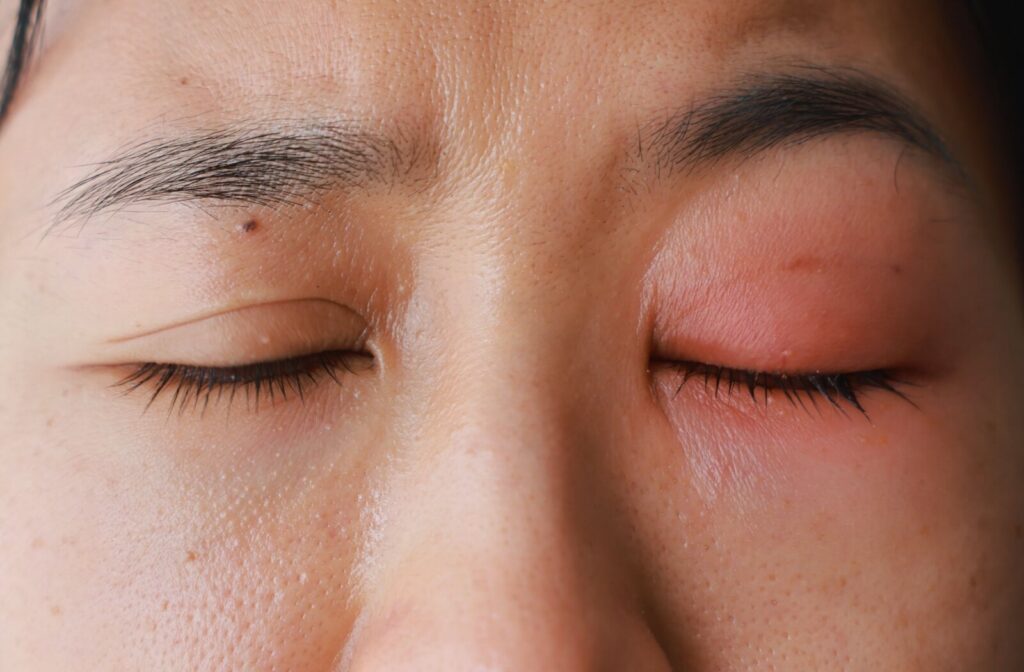
- Puffy, red, or swollen eyelids
- Watery or intensely itchy eyes
- A burning sensation in your eyes
- A gritty feeling, like sand is in your eye
Common Causes for Puffy and Swollen Eyes
Your swollen eyes are a response to triggers in the world around you. These triggers, or allergens, are usually harmless substances that your immune system flags as a threat. Since symptoms can sometimes overlap with other conditions like dry eye, identifying what might be causing your reaction is the first step toward finding relief.
Many everyday things can lead to puffy and swollen eyes. These often include:
- Seasonal allergens like pollen from trees, grass, and weeds
- Indoor triggers such as dust mites, pet dander, or mould
- Irritants from personal care products like makeup, lotions, or skincare creams
How to Reduce Swelling from an Allergic Reaction
When you feel the puffiness and irritation start, a few simple steps can help you feel more comfortable quickly. These methods focus on soothing your eyes and removing whatever is causing the reaction. It’s about calming the immediate symptoms while you figure out the trigger.
Soothe Swollen Eyes at Home
Simple at-home care can provide immediate relief from swelling and itchiness. Applying a cool, damp cloth to your closed eyes for a few minutes helps shrink swollen blood vessels. This can reduce redness and give you a sense of comfort.
Over-the-counter lubricating eye drops, sometimes called artificial tears, can also help. They work by rinsing the allergens out of your eyes. One of the most important things to do is to avoid rubbing your eyes. Even though it’s tempting, rubbing can make the swelling and irritation worse.
Remove Potential Irritants
Gently washing your face and eyelids helps to remove any pollen or dander that has collected there. If you’ve recently started using a new cosmetic or cream, it’s a good idea to stop using it to see if your symptoms improve.
On days when the pollen count is high, you may find relief by staying indoors with the windows closed. This simple step reduces your exposure to airborne allergens, giving your eyes a chance to recover. Using a vacuum with a HEPA filter can trap dust and dander more effectively, and washing your bedding in hot water weekly also helps reduce exposure to dust mites.
How to Prevent Puffy Eyes from Allergies
Once you find immediate relief, your next goal is to prevent the symptoms from coming back. Prevention often involves making small changes to your routine, especially during peak allergy season. These adjustments can make a significant difference in how you feel day to day.
A good preventive strategy includes identifying your specific triggers and trying to avoid them. Keeping your home’s windows closed can stop pollen from drifting inside. When you do go outside, wearing wraparound sunglasses can act as a physical barrier, protecting your eyes from airborne allergens.
Consider using an air purifier with a HEPA filter in your home, especially in the bedroom, to capture airborne allergens. If you wear contact lenses, switching to daily disposables during allergy season can prevent allergens from building up on the lenses.
When to See an Eye Doctor for Your Allergies
At-home remedies can be very helpful for mild allergies, but sometimes they aren’t enough. If your symptoms don’t get better or start to interfere with your daily life, it may be time to get professional guidance. An eye doctor can provide a thorough health check to determine what is causing your discomfort.
An eye doctor can help distinguish between allergies and other eye conditions that may have similar signs. Based on an examination, they can recommend prescription-strength eye drops or other treatments designed to manage more persistent allergy symptoms effectively.
You should consider scheduling an appointment if:
- Your symptoms continue for a long time or get worse
- You experience any eye pain or changes in your vision
- Over-the-counter options are not providing enough relief
Find Allergy Relief Today
You don’t have to manage persistent eye allergies on your own. If your symptoms are affecting your quality of life, our team at The Eye Care Centre can perform a thorough examination to help you find a path toward clearer, more comfortable vision. Book your appointment today.