
You might notice that road signs look a little fuzzy, or maybe your child is squinting to see the television from across the room. This common experience of clear up-close vision but blurry distance vision can be frustrating and even disruptive to your daily life. It often leaves you wondering what’s happening with your sight—a question the team at The Eye Care Centre can help answer.
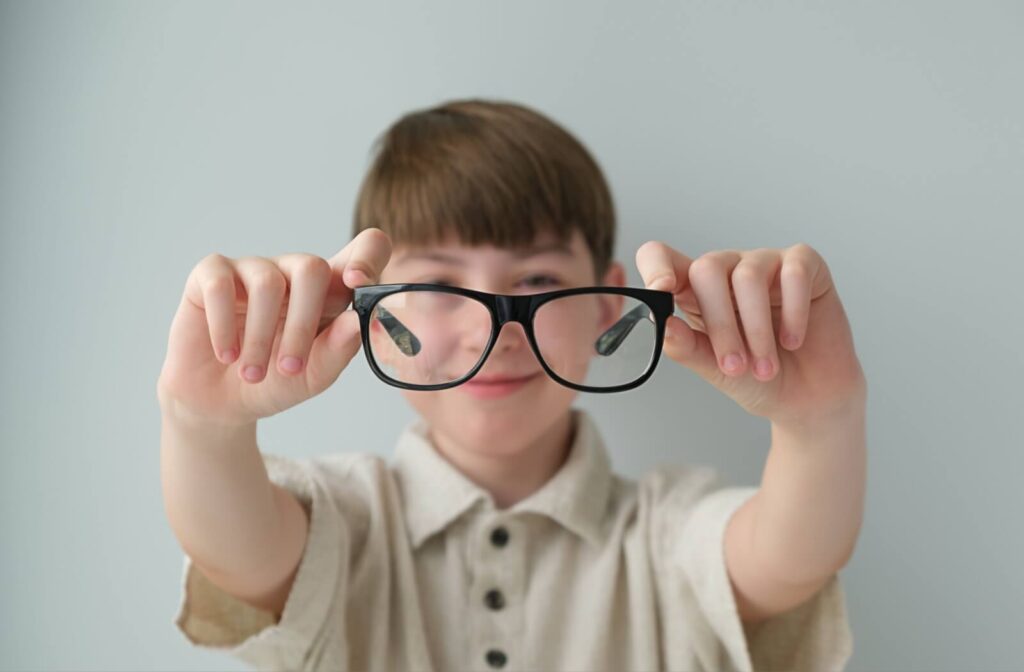
Myopia glasses are prescription lenses designed to correct nearsightedness, which helps you see distant objects clearly. They work by refocusing light properly onto the back of your eye, turning a blurry world into a sharp one. These glasses are a straightforward and effective tool for managing the effects of myopia in both children and adults.
A Simple Look at Nearsightedness (Myopia)
What You See
When you have myopia, your world is divided into two distinct zones of clarity. You can read a book or look at your phone with no trouble, but objects farther away become indistinct and blurry. This condition is what most people call nearsightedness. Some common signs include:
- Far away objects appear blurry
- Close-up objects remain clear
- Trouble reading a whiteboard from the back of a classroom
How It Happens
Myopia occurs when the shape of your eye causes light to focus in front of the retina—the light-sensitive tissue at the back of your eye—instead of directly on it. This miscalculation is what blurs your distant vision. The condition often develops during childhood and can gradually change as you get older, which is why regular eye exams are so important.
How These Special Lenses Correct Your Sight
The Job of a Myopia Lens
Think of myopia glasses as a guide for light. The lenses used to correct nearsightedness have a specific concave shape, thinner in the centre and thicker at the edges. This design helps bend incoming light rays outward before they enter your eye. By redirecting the light, the lens ensures the focal point lands perfectly on your retina, making distant objects appear sharp and clear again.
Lens Options for Your Myopia Prescription
Single Vision Lenses
The most common tool for correcting myopia is a single-vision lens, one of several options available. These lenses have one prescription power across their entire surface. They are made to do one job—correct your distance vision so you can see things far away without blurriness.
Special Lenses for Children
For children, some lens technologies are now available that may help manage the progression of myopia. These lenses are designed differently from standard single-vision lenses. If you’re concerned about your child’s changing vision, you can ask your eye doctor about the options available, as there are now multiple glasses and contact lenses that can slow the rate of progression of myopia in children.
A Guide for When to Use Your Glasses
For Clear Distance Vision
Your prescription is designed to help with specific activities where sharp distance vision matters. Wearing your glasses can improve your vision and safety while driving, especially at night. They can also make experiences like watching a movie or seeing a play more enjoyable. For children, wearing them in the classroom helps them see the board and participate fully in lessons.
Use for Screens & Digital Devices
While you might see screens up close just fine, uncorrected myopia can sometimes contribute to symptoms of digital eye strain. Your eye doctor can provide professional advice on whether you should wear your glasses all the time or just for certain tasks. Following this guidance and remembering simple tips like the 20-20-20 rule helps keep your eyes comfortable.
Notice These Signs? Time for an Eye Doctor
Common Symptoms in Adults & Children
Your body often gives you signals when it’s time for an eye exam. If you or a family member experiences any of the following, it might indicate a change in vision, and it’s helpful to know the common signs that your child may need glasses.
- Frequent squinting to see clearly
- Headaches or tired eyes after focusing on distant objects
- Moving closer to the television or holding books near the face
Get Help from Your Eye Doctor in Red Deer
The first step toward clear vision is a comprehensive eye exam. An exam allows a professional to check your eye health and determine your exact prescription. When you see your eye doctor in Red Deer, you can discuss your family’s unique vision needs and explore the right solutions for you.
If you recognize these symptoms in yourself or a loved one, it may be time to address them. The team at The Eye Care Centre can perform a thorough eye exam and help you find a clear path forward for your vision health.