


Your eyes work from the moment you wake up, so it makes sense that they’ll let you know when something’s wrong. Maybe the scratchy feeling started after a long afternoon on the computer, or you woke up with 1 eye sore and swollen. Either way, the discomfort can follow you through the day.
Eye discomfort usually comes from dryness, allergies, airborne irritants, contact lens habits, or an infection, though pain with vision changes may point to a problem inside the eye that needs care right away.
What Does Eye Discomfort Feel Like?
The way your eye hurts can tell your optometrist a lot about where the problem starts. You might notice:
- A gritty, sandy feeling, like something’s stuck under your lid
- Burning
- A sharp, stabbing sensation
- A dull ache when you move your eyes
Problems on the surface of the eye tend to itch or sting. Pain that starts deeper is more likely to throb, and you may notice it most when you look from side to side.
When Only One Eye Hurts
If only 1 eye hurts, think back to whether something could’ve gotten into it. A scratched cornea, a stray eyelash, or a stye along the lash line usually affects just 1 side. Infections can start in 1 eye too, even while the other feels fine.
Common Sources of Eye Discomfort
Dry eye is one of the most frequent reasons people come in with sore eyes. It often shows up after long stretches at a screen, since you blink less when you’re concentrating.
Allergies to pollen, dust, or pet dander can make your eyes itch and water, often more in certain seasons.
Pay attention to the air around you, too. Campfire smoke, pool chlorine, and pollution can leave your eyes stinging by the end of the day. When wildfire smoke drifts in, keep your windows closed and wear wraparound sunglasses outside.
How Contact Lenses Can Cause Eye Discomfort
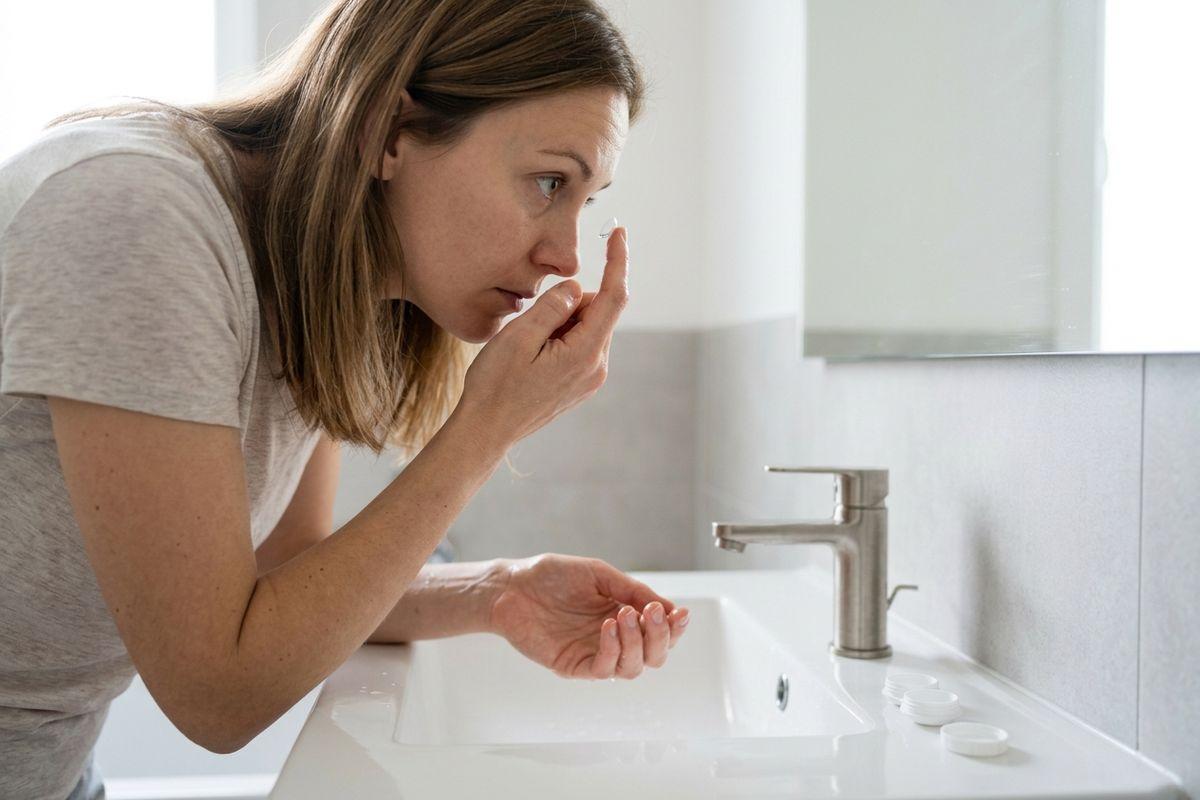
Sleeping in your lenses, wearing them past their replacement date, or skipping proper cleaning can leave your eyes red and sore.
Get your lenses from an optometrist who has fitted them to your eyes. Lenses that sit poorly can rub against the eye and add to the irritation.
Eye Infections and Inflammation That Cause Pain
Infections and inflammation often come with signs you can spot in the mirror. Look for:
- Pink eye, which brings redness, watering, and sticky discharge
- Blepharitis, which leaves your eyelids swollen and sore
- A stye, which forms a tender bump along the edge of your eyelid
Serious Causes of Eye Pain
Some eye pain needs more than drops and rest. A corneal ulcer is an open sore on the front of the eye, and it can turn a small irritation into steady pain.
A sudden rise in eye pressure, known as angle-closure glaucoma, can bring severe pain along with nausea. Treat it as an emergency. Inflammation inside the eye is another concern, and it tends to cause pain along with light sensitivity.
Optic neuritis happens when the nerve that connects your eye to your brain becomes inflamed. It can make your eye hurt when you move it and will likely change how well you see.
Congested sinuses can also create an ache behind or below your eyes that feels like an eye problem.
When to See an Optometrist for Eye Pain
Certain symptoms mean you should get emergency eye care the same day. Call your optometrist right away if you notice:
- Blurry vision
- Halos around lights
- Fever or chills along with the pain
- Vomiting
- An injury, a chemical splash, or an object stuck in your eye
Steps After an Eye Injury
If you’ve hurt your eye, take these steps:
- Cover the eye and keep your hands away from it, since rubbing can make the damage worse.
- Leave any stuck object where it is, because pulling it out yourself can cause more harm.
- Rinse a chemical splash with clean, lukewarm water for at least 15 minutes.
- Get care right away instead of waiting to see how it feels tomorrow.
How to Prevent Eye Discomfort
Wash your hands before you touch your face. When your eyes feel itchy, try not to rub them, since rubbing can spread allergens and bacteria.
Take breaks during long screen sessions. Every 20 minutes, look at something about 20 feet away for 20 seconds, a habit known as the 20-20-20 rule.
Wear protective eyewear when you’re playing hockey, trimming the yard, or working with tools in the garage.
Find Out What’s Causing Your Sore Eyes
Some eye conditions develop without any discomfort at all. A regular exam lets your optometrist check the health of your eyes before symptoms show up, and we’re happy to see everyone in the family, from your youngest to your parents.
If your eyes have been sore, gritty, or hard to ignore, the team at The Eye Care Centre can take a closer look and help you find relief. Book your appointment today!